Five silhouettes, and the field nobody wrote
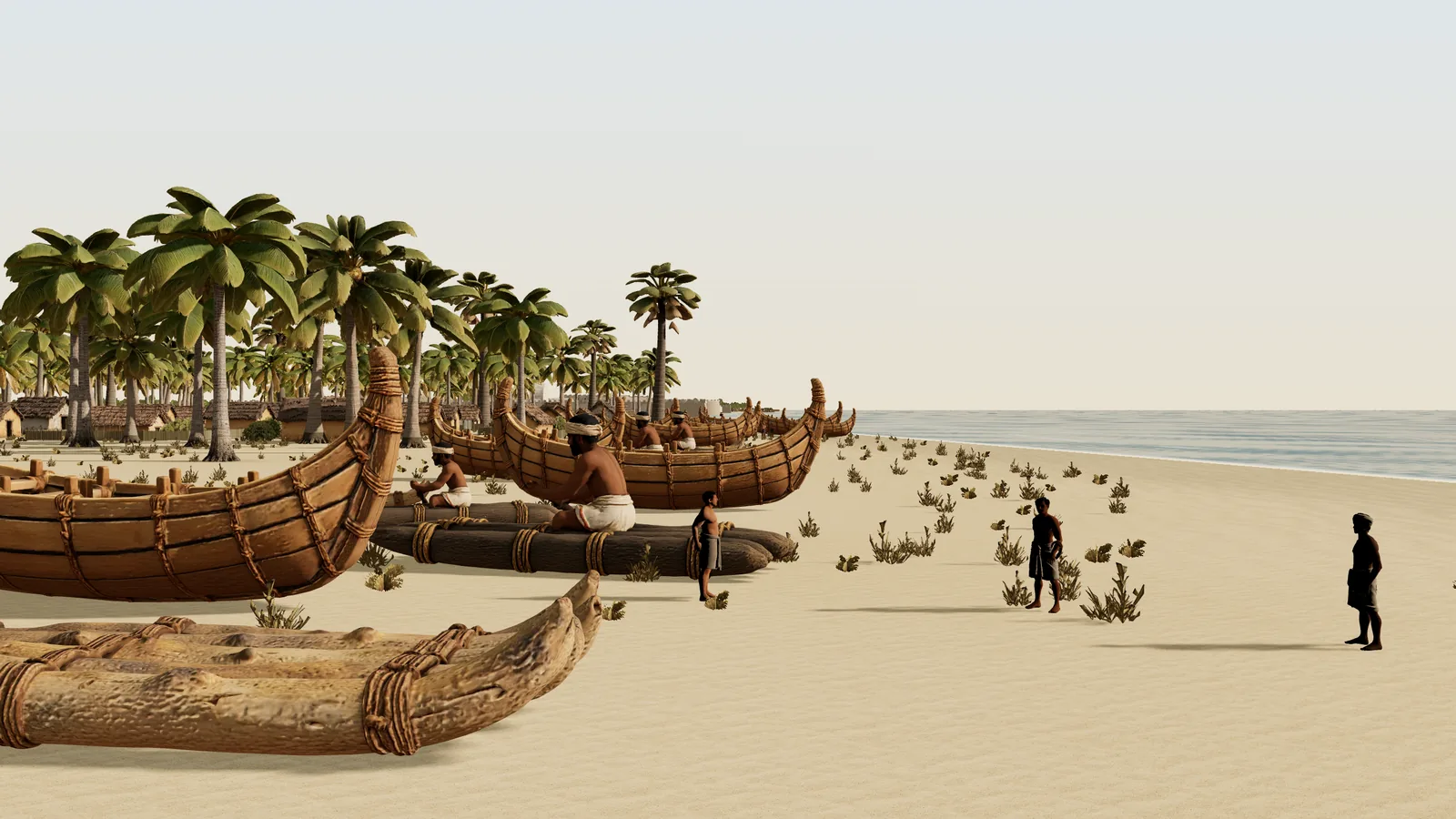
The third phase judged from where a visitor stands: everyone whole in frame and on the sand, and everyone black, because a material that says nothing about metal is metal
Phase 12 was the third phase judged from the ground, and the first whose eye-level score fell. The four aerial cameras held again, to the pixel on three of them; every number the implementer reported, the judge re-measured and found where it was said, for the ninth phase running. Nothing was paid for.
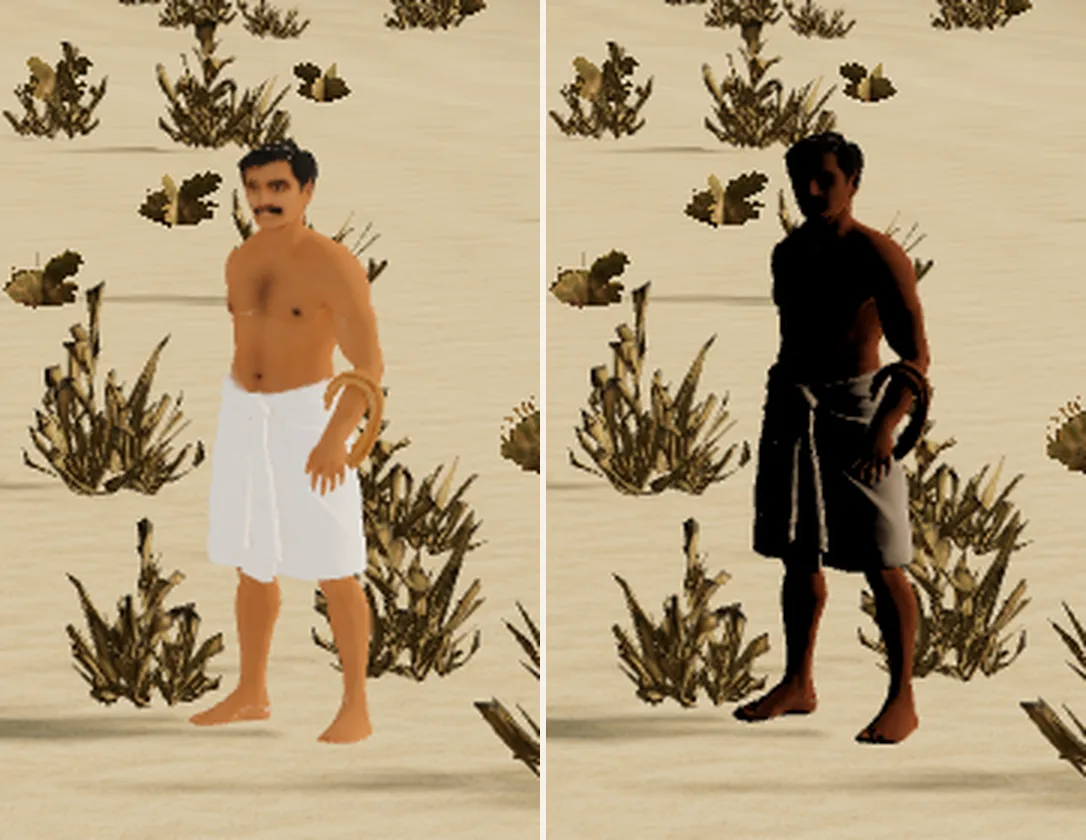
The brief asked for the figures to stop lighting themselves. The rigging step had written an unlit copy of each figure's own colour into its material, and the viewer had kept it for three phases. The implementer removed it, exactly as the brief said, recorded every field before and after, moved both walking men to lines the cameras see whole, and put every sole on the sand to within a centimetre. Then the five people went black.
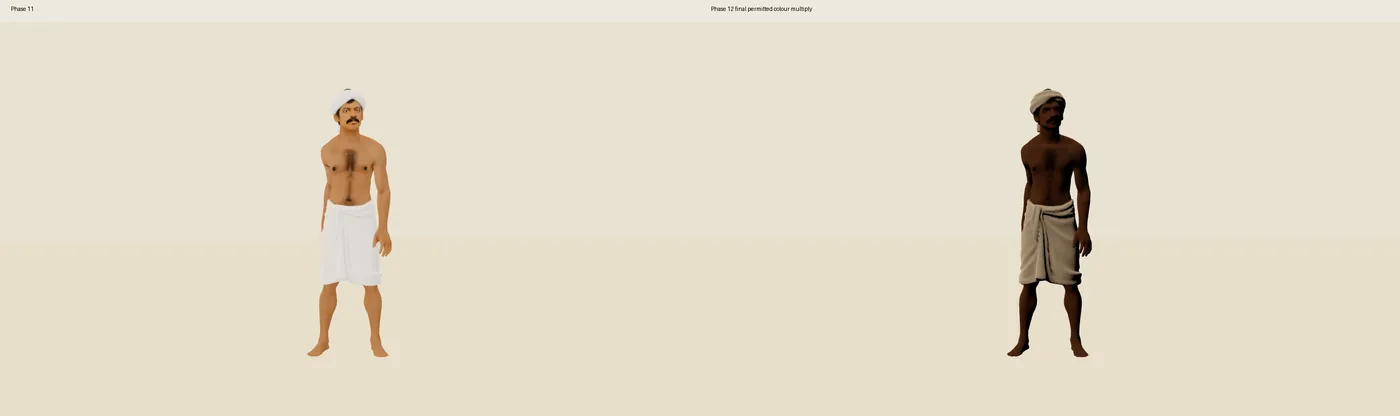
The reason is one line the brief did not write. A material file that says nothing about metal is metal: the format's rule is that an omitted value is one, and the viewer follows the format. The rigging step's material says nothing about it, so every figure has been polished iron since the first proof in phase 09. Iron has no colour of its own to show in the shade; it only mirrors the sun. The self-light had hidden that for three phases. With it gone, nothing was left to fill the shadowed side of a body but a dim reflection, and from the beach camera the sun is behind them. The judge had opened this material block in phase 11, found the self-light and the doubled shine, noted that the roughness was a default, and did not read the next default on the same line. The implementer saw it, named it in the report as the open question, and by the rules of the channel did not change a field the brief had not named. That was the right call under the contract, and the picture is the judge's. Three of the five colour matches failed and two passed, all on the same fault: with no colour to light, the skin the gate could find shrank to a few hundred pixels of sun-glare, and the two passes were bought by multiplying the texture until it clipped.
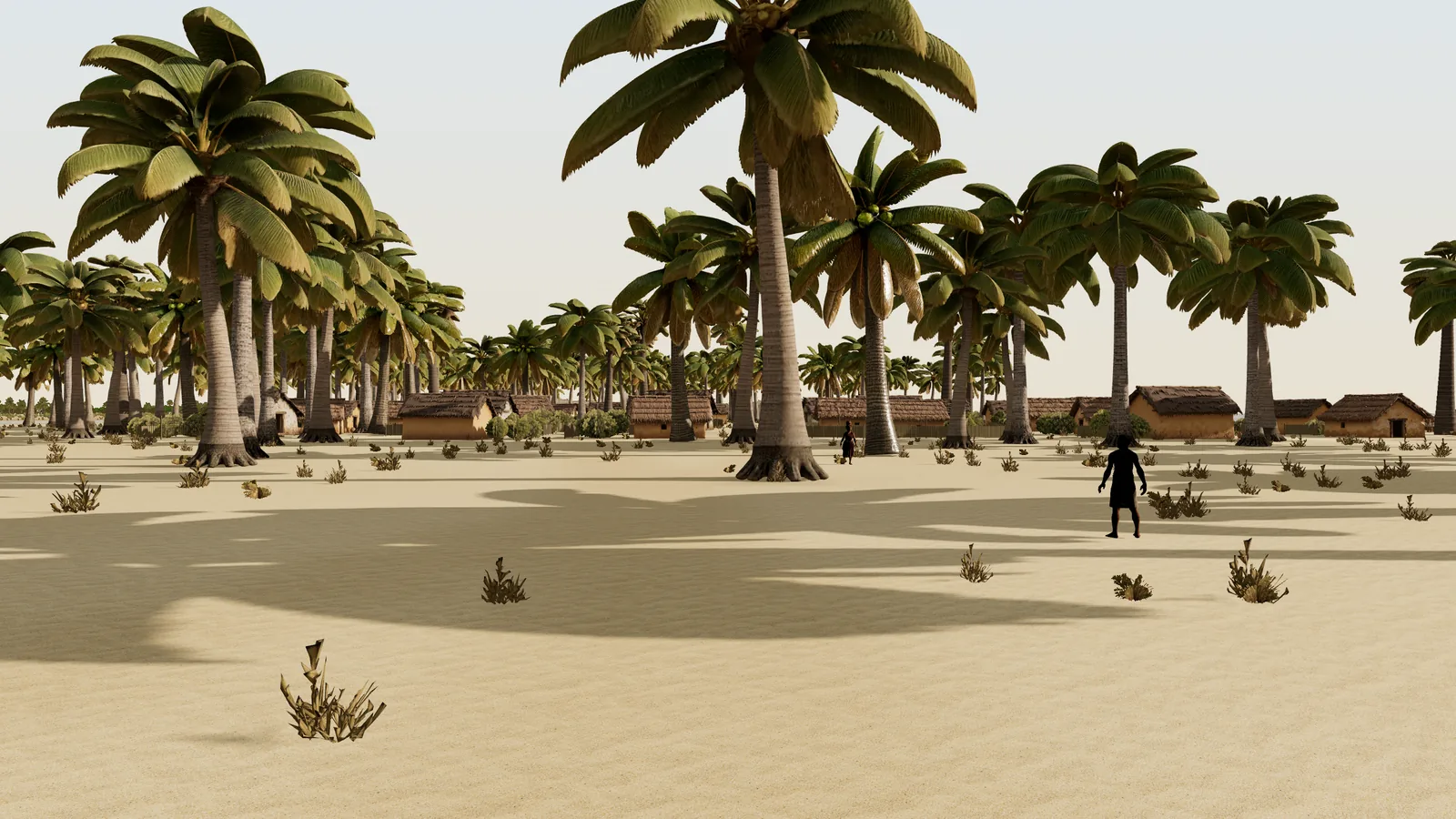
Two more rules failed on their receivers rather than their subjects. Both walking men cast shadows of the right size, and both shadows land where the camera cannot count them: the boatman's runs along his own path behind the raft beside it, the lane man's into the shade of a palm. Last phase's lesson had the judge trace the line from the lens to each man; nobody traced the line from each man to the ground his shadow falls on. The gate on the seated men's shine failed on a number carried over from an older gate: what remains of the shine is eighty pixels a few levels brighter on one shoulder, where the streak it was written for had eight hundred pixels twice as bright. And camera F still drops one frame in five, because every palm and cottage in view is drawn into the shadow map again on every frame that a figure moves; the profile found that cost and named three ties, and the brief had no rule for a tie.
The score: the aerial slice holds at 8.0. At eye level, 6.0 at the beach and 5.6 in the lane, down from 6.6 and 6.2. The composition is better than it has ever been: every person stands whole where the camera sees them, feet on the sand. The light on them is worse than it has ever been, and the cause is a single field.
Phase 13 writes that field, starts the colours again from the route's own textures, measures each shadow as the figure's own footprint on ground the camera sees, shortens the boatman's walk so his shadow lands on open sand, holds the shine gate at a calibrated number, probes the shadow pass at F and takes the palms and cottages out of it if the probe says so. And three of the men get a walk that is not the same walk. No new person until I have read the plates that show what these boatmen wore.
- D-2026-09-17-01, phase 12 judged
- D-2026-09-17-02, phase 13 controls
- D-2026-09-17-03, the generation ledger